Cray Decisions: The Economics and Culture of Multi-Million Dollar Compute
Explorers of the Earth & Computing | By Laurent Clerc, CTO HPC and Cloud Solutions | Blog 3 | Jul 23, 2026

In the first two posts, I talked about the early days when industrial computing was still finding its place, and we were learning the habits that made these environments reliable and repeatable. In this one, I jump to the moment everything scaled up.
And I mean really scaled up.
When Cray entered the picture, the conversation stopped being just about performance and started being about commitment. It also changed the day-to-day culture, because a machine at that price must pay its way.
These machines cost a small fortune. So, you didn’t just “try something” on a Cray. You thought first. You were careful what you ran, because every run had a price.
So, What Is a Cray?
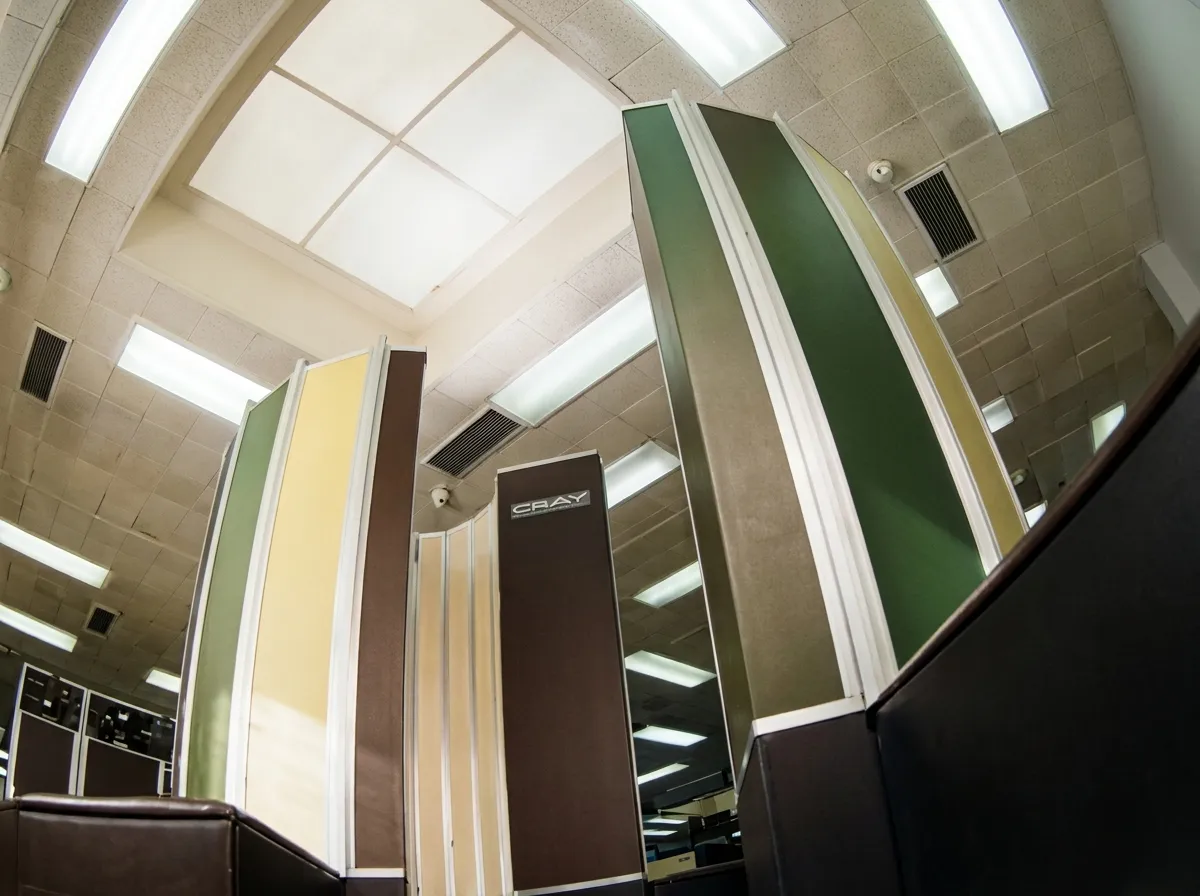
These were the supercomputers built by Cray Research, machines that became almost synonymous with high-performance computing throughout the 1980s and into the early 1990s. They were purpose-built to run scientific and industrial workloads at scale, and they often used vector processing, which rewarded very carefully written code.
In practice, a Cray wasn’t a “big server”. It was an environment. You planned for power and cooling, you planned for specialist support, and you planned for everyone to share it. That’s why it shows up in this story as much more than a technical upgrade – it was a technical turning point. This is where the first model-driven processing really starts. You move beyond mostly signal-processing approaches into workflows where a subsurface model begins to guide how you migrate and interpret the data. Once you have that model in the loop, the game changes.
If the Perkin Elmer era introduced discipline, the Cray era introduced scale. These were no longer machines you could tuck into a corner of a processing center. They were multi-million-dollar strategic bets, and buying one usually meant Board approval, CFO scrutiny, and CEO-level commitments to power, cooling, people, and risk.
When Technology Became a Board-Level Discussion
The first time I observed senior leadership discuss a Cray purchase, the conversation had almost nothing to do with FLOPS (at least, not directly). That sounds odd, because you’d expect the whole discussion to be about performance. But it wasn’t. It was really about:
- Strategic throughput advantage: Could we turn imaging cycles into competitive differentiation?
- Contract win rate: How do faster migrations and modeling translate into value for our clients?
- Return on geological accuracy: Could higher‑fidelity models de‑risk exploration enough to justify the capital?
- Reputation: Owning a Cray signaled leadership. In our world, supercomputers were also a status symbol.
Utilization Economics: The Machine Had to Earn Its Keep
Once you’d spent the money, utilization wasn’t just a metric. It became an obsession.
A Cray sitting idle for an hour felt like a jetliner grounded on a ramp. You could almost hear the money evaporating. Every workflow was scrutinized. Every queue was tuned. Every unnecessary rerun was treated like a financial event.
- Throughput became a revenue enabler, not just an engineering metric. If we could run more, we could deliver more, and that translated directly into value.
- Scheduling became financial optimization, not just operational housekeeping. Queue time, priorities, and reservations stopped being “IT details” and started being money.
- Code efficiency directly affected project margins, because vector architectures rewarded careful programming. A small improvement in code could mean less runtime, fewer reruns, and real savings.
You can still see that culture at Viridien. The mindset that HPC must convert energy and time into client value, with ruthless efficiency, really started here.
The Hidden Cost: Vendor Maintenance & Environmental Realities
Of course, the budget didn’t stop when the Cray arrived.
Maintenance contracts were extremely expensive. You were often paying for vendor engineers onsite, specialized parts, and service agreements that could feel a bit like airline maintenance programs. On top of that, the power and cooling footprint was massive, so you ended up planning dedicated electrical feeds and new environmental controls.
Capacity forecasting, vendor relationships, long-term infrastructure finance, it all had to become part of the job.
Cray Culture: When Machines Became Icons
When a Cray showed up, you could feel the cultural shift. These systems weren’t just tools. They became identity-defining assets, and they changed how we organized ourselves around compute. We set up a formal IT benchmarking group to check performance, negotiate contracts, and sanity-check vendor claims.
The Heathrow Radar Story: Real-World Unpredictability
One thing I’ve learned from being pioneers in this space is that every leap forward comes with a new set of problems you didn’t even know to expect. The Heathrow story is a perfect example. We’d deployed an early Cray system in our offices near this major UK airport hub, and we were still learning what “real world” looked like for this first-generation technology.
At one point, the team genuinely wondered if airport radar pulses were causing odd behavior in the machine. Imagine that for a second: highly trained engineers entertaining the idea that an aircraft on final approach could nudge a multi-million-dollar supercomputer off balance.
In the end, that wasn’t what was happening. But the story stuck, because it captures something important:
When you operate at the limits of what the technology can do, the boundary between engineering and the real world gets a bit unpredictable.
We still run into modern equivalents, like unexpected environmental interactions or resilience challenges at extreme density. Technology has moved on, but the surprises haven’t.
From Cray Decisions to Modern Investment Strategy
The Cray era shaped how Viridien still makes big computing decisions today. The logic hasn’t changed that much:
- Every hardware expansion is a portfolio decision: it’s not just an upgrade. You’re balancing capacity, risk, and timing, not just shopping for improved kit.
- Utilization and efficiency still drive value: especially now that energy isn’t getting any cheaper. If the machine isn’t being used well, it’s a tough spend to defend.
- Maintenance and datacenter engineering are strategic: not afterthoughts. The unglamorous bits, parts, people, power, and cooling, are usually what decide whether the system actually succeeds.
- Cultural capital still matters: if you’re running frontier-level compute, people notice. It helps you hire and keep great people; it reassures clients that you can deliver, and it gives teams a bit of pride because they know it takes real discipline to run well.
A Different Kind of Legacy
Looking back, what stays with me from the Cray era isn’t only the procurement drama, or the maintenance contracts, or even the famous Heathrow radar scare (memorable as all of that was). What lingers is how these machines pulled people together.
A Cray forced conversations between groups of people who previously lived in different universes: geophysicists, systems engineers, facilities teams, operators, coders, and yes, even leadership. Suddenly everyone shared a common dependency on the same humming, vector-driven heart of the organization. You could stand in a data hall next to a Cray and feel the collective effort that kept it running, from the cooling experts, to the programmers rewriting kernels for vectorization, to the operators babysitting queues at 2 a.m., to the vendors with their specialized tools, to the scientists pushing the limits of what the hardware could do.
I still see the same instinct alive in our centers today: the desire to do great work together, right at the limits of what the technology allows.
That’s the real legacy of the Cray years.
Got a question about our early field computing days?
Laurent Clerc,
CTO, HPC and Cloud Solutions