Know who you are and don’t let anyone define you: Meet Kathie Johnson
Viridien Stories | Mar 9, 2026
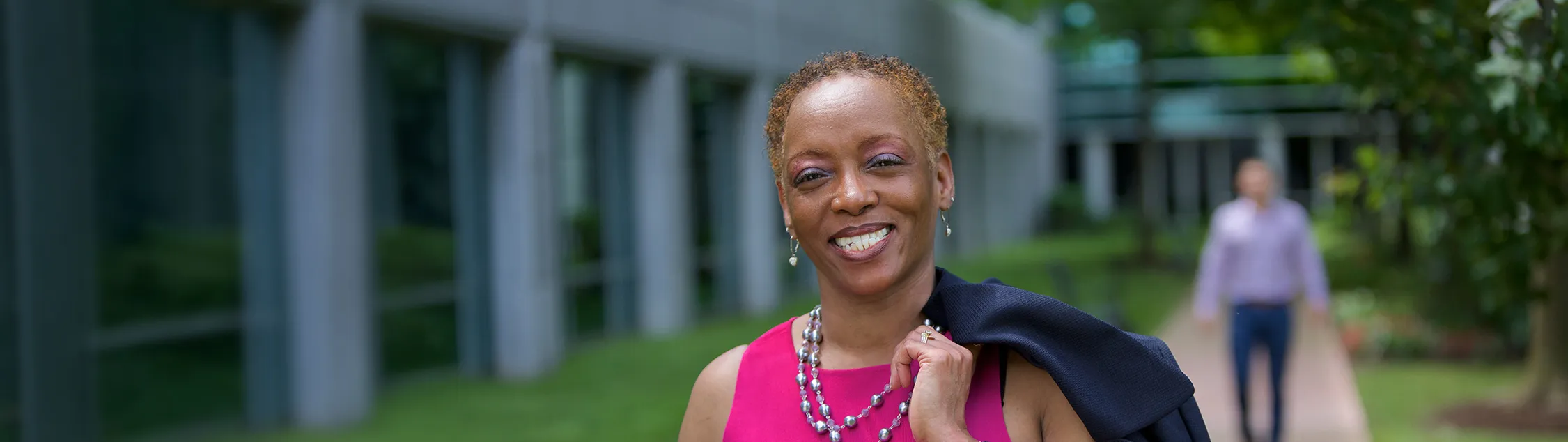
To mark International Women’s Day and International Day for the Elimination of Racial Discrimination, we celebrate the career of Kathie Johnson, who began working at her local restaurant at just 14, out of a desire for financial independence. She later trained as an accountant and rose through the ranks of Viridien’s finance & accounting team. After 35 years of distinguished service, we asked her about the experiences that shaped her path and the advice she would give as a woman of color navigating and succeeding in her field.
What was your first job?
When I was only 14, I was anxious to become financially independent and was hired at a local restaurant called Dairy Queen. I wanted my own money to be able to purchase the books, clothes and shoes I desired. At age 16, because of my outstanding work ethic, I was working as the manager, opening and closing the restaurant with access to the safe and cash drawers.
What first led you to work for the oil and gas industry?
Prior to completing my studies, I applied for a position as an accounts payable (AP) clerk with Digicon (which later merged with Veritas, which then went on to merge with CGG before the company rebranded as Viridien). Later, I studied for and graduated with a bachelor’s degree in accounting at the University of Houston while I was working full-time.
How did your career develop and what were the most memorable moments or turning points?
I was blessed to be trained by some of the best managers. I embraced and applied the knowledge I received and was soon promoted to AP supervisor. During the acquisition of Digicon by Veritas, I was promoted to staff accountant and then to AP manager. I was recognized as a super user of financial applications, so I pursued the position of financial support analyst because I was seeking to understand the system-based accounting processes after the acquisition of Veritas by CGG. Ten or so years later, I was promoted to accounting manager in our US finance hub.
Some of the most memorable moments were observing the culture changes during each of the acquisitions and witnessing the changes in our US entity and Corporate America. Digicon was a male-led company whereas Veritas included women in their leadership. There were differences in culture between the two companies (US and Canadian), and no training or written resources were available at that time to help connect the different cultures. With the Veritas and CGG union, a language barrier was added to the mix. Navigating through the challenge of communicating with your peers and understanding the different work ethics and personal values with no diversity training at the beginning was a profound experience that almost changed my professional direction.
Was there a particular project or role that challenged you the most — and what did you learn from it?
One standout challenging project was implementing our current accounting system. The project required me to travel to places I thought I would never see such as the Netherlands, Singapore, Malaysia, Japan, China and France. Working with a diverse group gave me the opportunity to build new relationships, learn about different places, and develop strategies to effectively communicate and bridge stereotype barriers. I had to learn how to travel to these countries because at that time, unlike now, there was an absence of company-issued travel guidance on expected behaviors when visiting other countries.
What has it been like being a woman of color in the company and wider oil and gas industry?
At the start of my career, there were a few women in the finance department and mostly men in management. Both the company and the oil and gas industry have presented a mix of challenges as well as growth opportunities. For years, the industry displayed a male-dominated space, but it is slowly changing. In the finance arena of the company, I was one of the few, if not the only person, who looked like me. To my knowledge I was the first Black woman to work in our US finance department and the first Black woman in management in the US entity. For many years, I felt tolerated but not fully accepted. Because I am secure with who I am, I was able to navigate through the stereotype, the occasionally distasteful comments and unfair expectations.
Did you ever feel like you had to prove yourself more than your male or Caucasian colleagues?
There were moments when I felt uncomfortable in my role and always needed to prove myself or manage other people’s stereotypes. The reaction my male counterparts received from saying “I don’t know the answer” was very different from the reaction I received when I said “I don’t know”. As a result, I had to be more prepared and manage assumptions others didn’t even think about.
Have you seen meaningful changes in how women and people of color are represented and treated in the industry? What changes still need to happen?
Absolutely, in our company there have been several people of color in the finance department in the US. Representation matters, so I salute Sophie Zurquiyah in her role as a CEO, and now on the Board of Directors in an industry with limited female representation, as well as many others. The onset of open discussions and training on biases, culture diversity and the different types of discrimination have educated people and made them more aware of their behavior.
Were there women or people of color mentors or allies who helped you along the way — or were you often the first or only woman of color in the room?
There were a few women in the company, of several different origins, who helped me navigate through this journey. While they were mentoring me, they were experiencing intimidation and disrespect from their male counterparts. So, imagine being the only person that looks like me in a room, in a space where women were already viewed as less than their male colleagues. That experience strengthened my resolve to succeed — not just for myself, but for those who would come after me.
What advice would you give to young women or people of color starting out in this industry?
The advice I would give is to know who you are and do not let anyone define who you are! Be competitive with your education, knowledge, wisdom, practical strategy and trust your competencies to stand out from the crowd. I would further encourage them to not allow biases to define them and to be confident, not arrogant. Connect with someone who has traveled on your journey to find mentors and allies.
What are you most proud of when you look back at your career?
I am mostly proud of my resilience, growth and the impact I have made on so many people and processes. I am also proud of the credibility and trust I have built and earned for myself and expect from others. Another point of pride is being vocal when it was uncomfortable, challenging decisions for further review and, more importantly, I have remained true to my values.
What do you hope your legacy will be — for the company, for your colleagues, and for the next generation of women of color?
I hope my legacy at this company reflects an employee who exemplified resilience and trustworthiness. A leader who led with integrity, spoke with purpose, and achieved meaningful results. A woman who created a space and an opportunity for women, especially women of color, to rise and thrive.
Do you still have dreams or goals you’re pursuing — inside or outside of work?
Yes, I have goals that I want to pursue professionally and personally. I want to continue to influence strategy in Viridien’s US finance hub, promote cultural awareness and become an ally or mentor for others. Personally, I want to focus on well-being, traveling, relaxing and family.
You’ve spent 35 years with the same company – what made you stay, and how have you seen the company evolve over the decades?
The reason I’ve stayed for 35 years is because it truly is a great place to build a career. It has challenged me at different stages and consistently gives me room to grow. Even today, I still see opportunities to develop and contribute in meaningful ways. Viridien provides an employee-oriented culture with strong support, and benefits. I’ve also been fortunate to work alongside exceptional colleagues and leaders who have shaped me professionally and made this journey rewarding.