
US HPC Hub Information
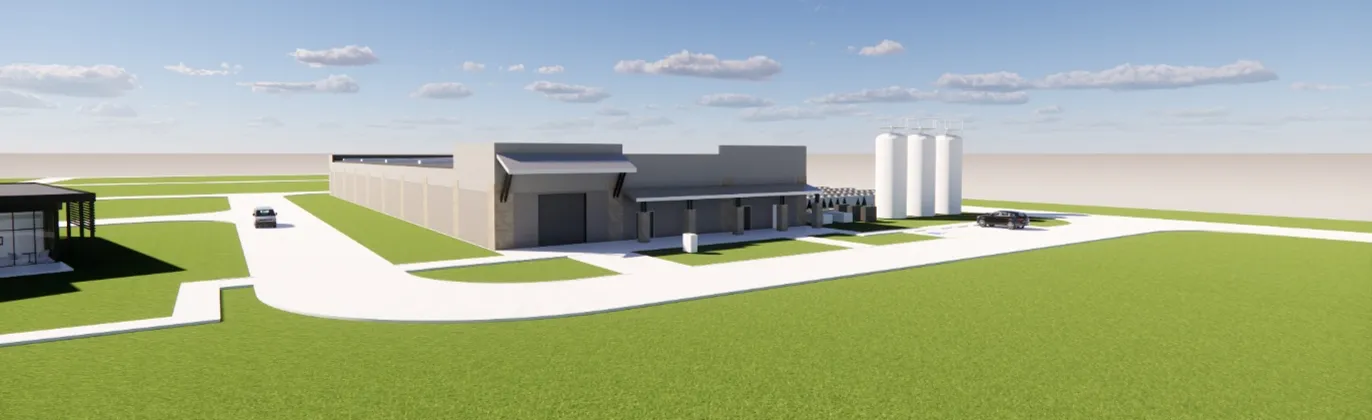
The Viridien US HPC Hub will be a new, purpose-built high-performance computing (HPC) center, located in Brenham, Texas, south of U.S. Highway 290, within an area zoned for industrial use. The specialized center will be on a much smaller scale than the large data centers operated by hyperscalers (large public cloud providers) and will support scientific and industrial computing, primarily for energy, engineering, and research.
Introduction
Viridien deeply values the concerns raised by the residents of Brenham at the Council meeting on January 8th, 2026. We are committed to listening to the community and ensuring that every concern is carefully considered and addressed. This page aims to provide clear, transparent information about the Viridien US HPC Hub, including both its benefits and potential impacts, in direct response to community feedback.
Key facts of planned scope
- Approximate building size: 40,300 square feet
- IT load of 3 megawatts (total facility 5 megawatts), with potential to expand to 15 megawatts (total facility 21 megawatts).
- Construction start: Early 2026, expected completion: End 2027
- Permanent onsite jobs: Approximately 26 technical roles
- Construction jobs will be created during the build phase
- Potential to expand on the existing property in the future
Environmental impact
We are committed to reducing our environmental impact through energy efficiency, emissions reduction, and responsible resource management. We use renewable energy for our facilities and seek to consistently improve power use efficiency as well as reduce waste and water consumption across all our operations. These ESG commitments apply to the proposed Brenham facility and have guided how it was designed, and how it will be built and operated.
Learn more about our sustainability commitments
Electricity
Power will be supplied via a dedicated connection that does not draw from municipal electricity service. Any required substation or transmission upgrades will be funded by Viridien, ensuring that none of that cost is passed on to other customers. The facility is committed to using 100% renewable energy. At full potential capacity, the facility’s IT load would use about 15 megawatts of power. For comparative purposes, large cloud data centers today require 500 to over 1000 megawatts or more.
Demand Response capability will allow operations to reduce load during ERCOT emergency events. The IT and cooling equipment, which represents over 90% of the electrical load, is not backed up by generators and is designed to ramp down its activity in the event of power loss or shedding. The single generator on campus provides emergency power only to the equipment required to ensure a safe and secure environment for our employees during power outages. It uses natural gas, is in a sound containment enclosure, and is tested weekly for about 30 minutes.
Water Use
Our immersive cooling system is closed-loop air-based. With this design, zero water is consumed for cooling, and no groundwater wells are required or drilled. The cooling system requires approximately 85k gallons initially to fill the closed loop. Closed-loop air-cooled technology is a proven alternative to water-based evaporative cooling systems that other data centers may use that consume large amounts of water.
After consultation with the City of Brenham early in the design phase and based on our experience with closed-loop air-based cooling on our recent installations, we decided on a closed-loop system that does not consume water for this project. Following initial filling, which will not use municipal water, no additional water is required for cooling throughout the life of the data center. Municipal water on the campus will only be used for staff facilities (kitchen, bathrooms, etc.) for approximately 26 employees, as well as city-mandated fire suppression systems. This usage is in line with standards and regulations.
Noise & Lighting
Projected noise levels will remain within city ordinance limits, peaking at approximately 65 dB (like normal conversation) at the property line and decreasing further beyond the industrial park boundary.
The on-site emergency generator is sound-attenuated and used for emergencies only. Exterior lighting will be downward-facing, shielded, dark-sky compliant, and will meet the International Energy Conservation Code (IECC) adopted by the state of Texas.
Sustainability Standards & Compliance
Viridien has outlined the following sustainability commitments and performance targets.
Current Commitments:
- Water Usage Effectiveness (WUE = 0): No water consumed for cooling
- Waste management and spill containment: Fully aligned with EPA and Texas regulations
Performance Targets:
- Power Usage Effectiveness (PUE): Target < 1.3 (state‑of‑the‑art efficiency)
- Certifications: Targeting LEED (environmental) and ISO 27001 (security best practices)
FAQ
1. Is the Viridien US HPC Hub a “data center”?
2. Will the facility impact local water resources?
3. Will the facility impact the municipal electricity supply?
4. Will there be any noise or light impact?
5. Will there be large generators on the site and associated emissions?
6. What environmental standards and compliance will the facility have?
7. How will the HPC Hub contribute to the local economy?
8. Will Viridien receive any tax incentives for this project?
The US HPC Hub facility is a specialized high-performance computing (HPC) center, distinct from public cloud, AI or cryptocurrency data centers in both scale and objective. Its purpose is scientific and industrial computing for energy, engineering, and research applications for Viridien and its clients. There are no plans to store personal data.
While it shares some basic similarities with data centers, it operates on a much smaller scale and with more advanced efficiency measures. The initial building size on the site is 40,300 square feet, about the size of an average grocery store. To give another comparison, a warehouse near the facility is approximately 130,000 square feet—more than three times the size of the US HPC Hub’s initial build.
It will have an IT load of 3 megawatts (total facility demand: 5 megawatts). There is potential to expand to 15 megawatts at full buildout (maximum total electrical demand: 21 megawatts, combining IT and support systems).
For comparison, as reported by KBTX, the previously proposed data center in College Station was expected to require around 600 megawatts, and the planned data center in Marquez, Texas is projected to be a 1,500-megawatt facility.
Power will be supplied by a dedicated connection, independent from the municipal grid. Any required substation or transmission upgrades will be funded by Viridien, ensuring that none of that cost is passed on to other customers.
The facility’s initial peak load for IT, air-based cooling and other needs of approximately 5 megawatts, and ability to expand to a potential of 21 megawatts, is significantly lower than the large hyperscale cloud data centers (approximately 500-1500+ megawatts).
Demand Response capability will allow operations to reduce load during ERCOT emergency events, which means the facility can voluntarily lower electricity usage during grid emergencies to support system reliability. The IT and cooling equipment, which represents over 90% of the electrical load, is not backed up by generators and is designed to ramp down its activity in the event of power loss or shedding.
Our current HPC Centers in Houston and the UK utilize 100% renewable energy from suppliers, and we are committed to the same approach for this new facility.
The facility will not use evaporative cooling, which continually consumes water. It will use a closed-loop air-based cooling system, consuming no water during operations. This is a proven alternative to water-based evaporative cooling systems that other data centers may use that consume large amounts of water.
Closed-loop air-based cooling uses the same principle as the water-cooling systems found in vehicles. Water is pumped around a closed cooling circuit, carrying heat from the engine to a radiator where it is cooled by airflow before being pumped back to the engine.
The capacity of the system for the US HPC Hub will be much larger than a car, containing 85,000 gallons of water in the pipes, radiators, and holding tanks. This is equivalent to the amount of water in the competition pool at the Blue Bell Aquatic center. Just like a car, the water in the closed loop is not being consumed, so the US HPC Hub will not need a continuous supply of water to operate after the initial fill, which will not use municipal supply (water will be delivered from an external supplier). As a result, no groundwater wells will be needed or drilled.
Viridien has pioneered closed-loop air-based cooling with its suppliers over the last decade, as it is far more efficient, sustainable and drought-resilient.
After consultation with the City of Brenham early in the design phase and based on our experience with closed-loop air-based cooling on our recent installations, we decided on a closed-loop system for this project.
Municipal water usage will be limited to regular domestic needs for staff facilities for approximately 26 employees (restrooms, sinks, etc.), as well as city-mandated fire suppression systems. Municipal water will not be used for the cooling system.
Noise: Projected noise levels will remain within city ordinance limits, peaking at approximately 65 dB (like normal conversation) at the property line and decreasing further beyond the industrial park boundary.
The on-site emergency generator is sound-attenuated and used for emergencies only. Also, acoustic barriers and landscaping buffers that you would find around any thoughtfully designed industrial site are planned.
Lighting: All exterior lighting will be downward-facing, shielded, and comply with dark-sky guidelines to minimize light spill. Light zoning and BUG (Backlight, Uplight and Glare) ratings have been taken into account, and the International Energy Conservation Code (IECC) adopted by the state of Texas will be met. In addition, we are working with LEED consultants to ensure we achieve the necessary site lighting certification compliance. It is estimated that from the downward-facing lights, we will have less than 0.2 foot-candlelight intensity at the property line (less than a full moon).
The IT and cooling equipment, which represents over 90% of the electrical load, is not backed up by generators and is designed to ramp down its activity in the event of power loss. The single generator on site provides emergency power only to the equipment required to ensure a safe and secure environment for our employees during power outages. It uses natural gas and is equipped with Tier 4 emissions controls and is subject to TCEQ permitting. It is in a sound containment enclosure and will be tested weekly for about 30 minutes.
Viridien is committed to reducing our environmental impact through energy efficiency, emissions reduction, and responsible resource management. We use renewable energy for our facilities, and seek to consistently improve power use efficiency, and reduce waste and water consumption across all our operations. These ESG commitments apply to the proposed Brenham facility and will guide how it is designed, built, and operated.
A site-specific environmental impact review is in place, and we are committed to being LEED (Leadership in Energy and Environmental Design) certified.
Viridien has committed to the following performance and compliance standards:
- Certification targets: LEED and ISO 27001
- Power Usage Effectiveness (PUE) target: < 1.3 (PUE is a measure of how efficiently a computing facility uses power. A score of 1.3 represents state-of-the-art efficiency.)
- Water Usage Effectiveness (WUE): 0 (No water consumed for cooling). WUE is a measure of how much water a computing facility consumes for cooling relative to its power usage. We will not be consuming water for cooling in our air-based closed loop cooling system. The WUE will be zero.)
- Waste management will be in line with EPA and Texas regulations. Any hazardous materials (coolants, batteries) will follow EPA and Texas spill-prevention protocols.
The project will initially create approximately 26 permanent technical roles and generate additional construction jobs. On a larger scale, the subsurface imaging work optimized through the US HPC Hub supports more effective and safer oil exploration and drilling in the US and beyond, with many of our clients based in Houston.
Estimated tax will be in the 7 digits (millions), providing support for local schools, infrastructure, etc. Final figures will be determined by assessed value and local tax rates.
At Viridien, we take a community-first approach in the places we live and work and are exploring community participation and benefit programs (STEM education partnerships, local scholarships, etc.).
Following the unanimous vote by Brenham City Council, at the meeting on January 8th, 2026, to unanimously reject the creation of a reinvestment zone for commercial tax phase-in the project, Viridien will not be receiving any reduction in taxes during the build or once operations are underway.
Viridien did apply for Texas-provided tax incentives (granted to many businesses in Brenham and Washington County), as the US HPC Hub project exceeded the required thresholds for capital invested and numbers of jobs created. The incentive would have phased in taxes mainly during the building of the center, rather than exempting us from paying our fair share.
About Viridien
Viridien (www.viridiengroup.com) Viridien is a geoscience technology company, and for over ninety years, has produced industry leading data and high-fidelity images of the earth and its sub-surface mainly for the oil and gas industry. To do that, we rely on our own software, highly specialized computing facilities, advanced mathematics and teams of Geoscientists and Geophysicists. We have been pioneering scientific computing for over 70 years, and the new US HPC Hub will be state-of-the-art technically and sustainably.
Viridien operates globally, employing about 3,200 people, with 525 in Houston, its Americas headquarters for over 50 years. Our US legal entity is CGG Services (US) Inc.
Viridien is listed as VIRI on the Euronext Paris SA (ISIN: FR001400PVN6).