Sorry, you need to enable JavaScript to visit this website.
Menu
Login

News

Modern Facies Analysis Brings Greater Accuracy to Reservoir Models

Publish Location
Paris, France
Tags
Body

New facies-first technique provides greater geo-model accuracy to optimize reservoir appraisal and assessment

Deriving facies models from the outcomes of seismic inversions, and their derivatives, has become standard practice in reservoir characterization workflows.

Publish Date
Image
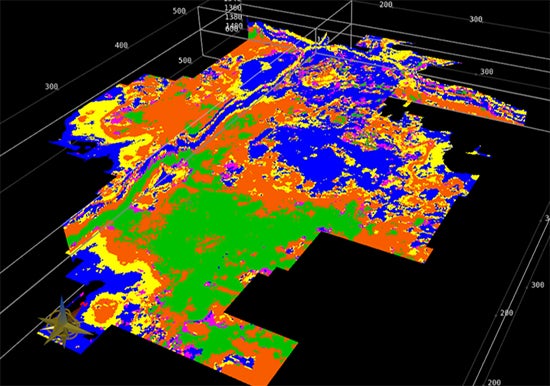
Bayesian facies analysis of a Barnett Shale data set. Green represents litho-facies with the highest quartz content and the greatest brittleness. Image courtesy of CGG GeoSoftware.
Layout Canvas

Delaware Basin: lifting the Cenozoic veil

Publish Location
Paris, France
Tags
Body

The latest seismic technology and multi-client products provide a new perspective on Northwest Texas plays

Booming hydrocarbon production in the Permian basin over the last few years allowed the United States to become, once again, one of the world’s top exporters.

Publish Date
Image
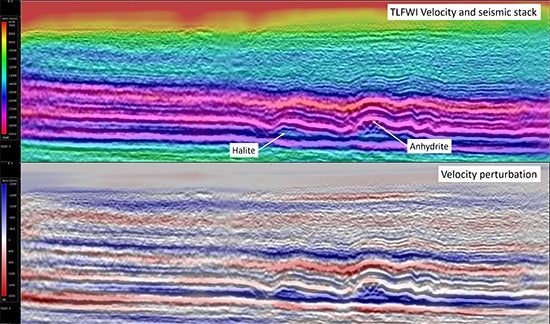
Time-lag full waveform inversion (TLFWI) results from CGG’s Gini 3D survey in the Delaware Basin. Top panel: 22Hz TLFWI output velocity model. Bottom: Velocity perturbation showing how TLFWI has updated the initial smooth input model. Final migrated seismic is overlain on both sections for reference (image courtesy of CGG Multi-Client & New Ventures).
Layout Canvas

High-End Seismic Imaging Solves Shallow Gas Challenges

Publish Location
Paris, France
Tags
Body

The latest Q modeling, and Q-compensating imaging techniques bring greater clarity to Northern Viking Graben

CGG has recently completed seismic depth imaging of its entire Northern Viking Graben multi-client survey, in the Norwegian North Sea.

Publish Date
Image
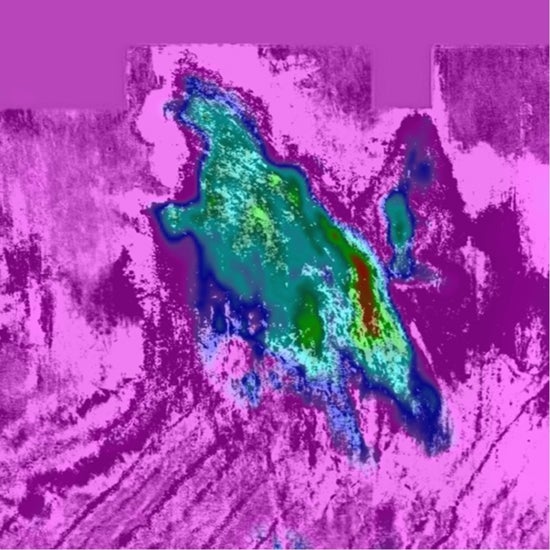
This slice, at a depth of 595 m through the Q model, clearly highlights the extent of the Peon gas field (image courtesy of CGG Multi-Client & New Ventures).
Layout Canvas