The Clusters Take Over: Look Ma, No Hands!
Explorers of the Earth & Computing | By Laurent Clerc, CTO HPC and Cloud Solutions | Blog 4 | Sep 24, 2026

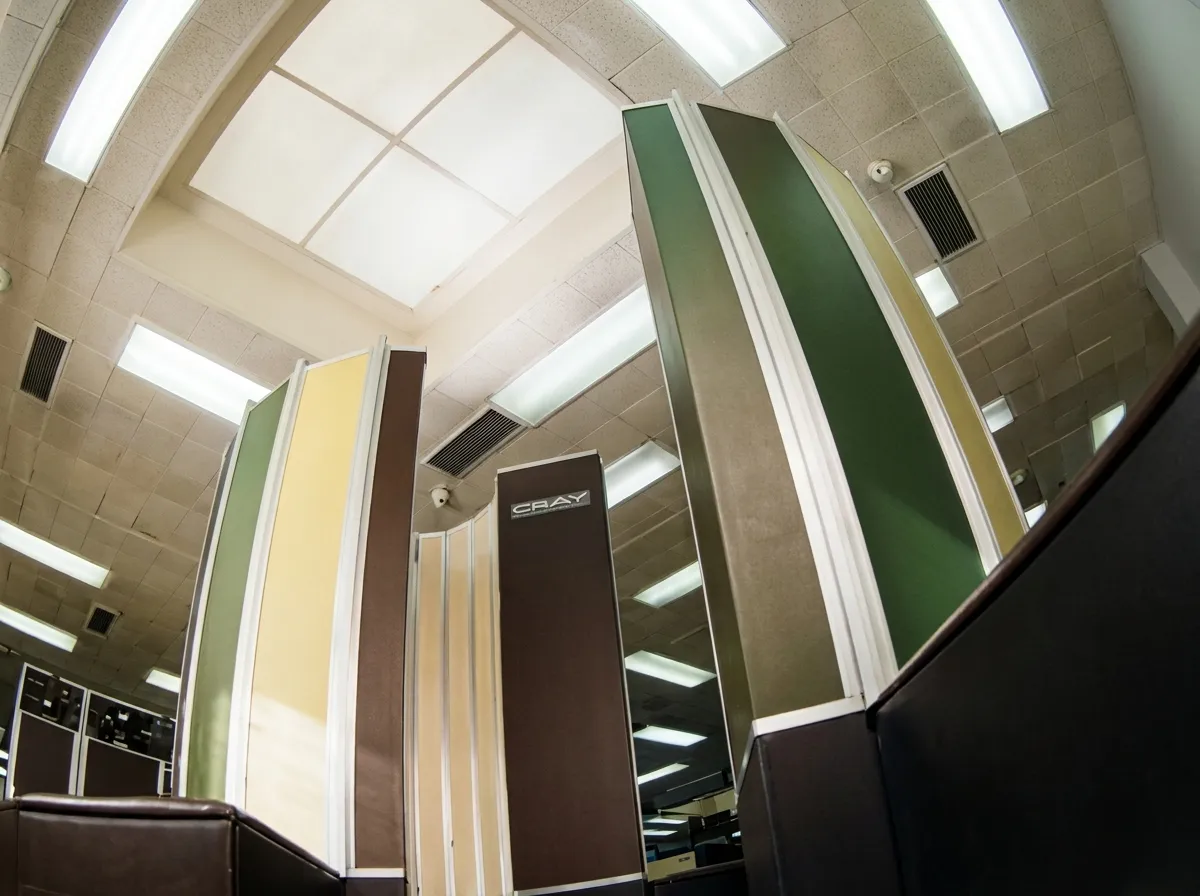
In my last post, we were in a mature era that had started with Crays and slowly evolved to include SGI Origins, IBM SP2, SUN Enterprise, and some other more exotic mid-range systems we tested and deployed to reduce the cost of large proprietary systems. Those machines were slick, easy to use, well maintained, and fast evolving. Life was good.
As we started supporting more combinations of CPUs, operating systems, and architectures across an increasingly large number of locations, our HPC team grew significantly in size and capability: we could put together complex configurations and deploy them anywhere on the planet in a surprisingly short amount of time — a skill we have maintained to this day.
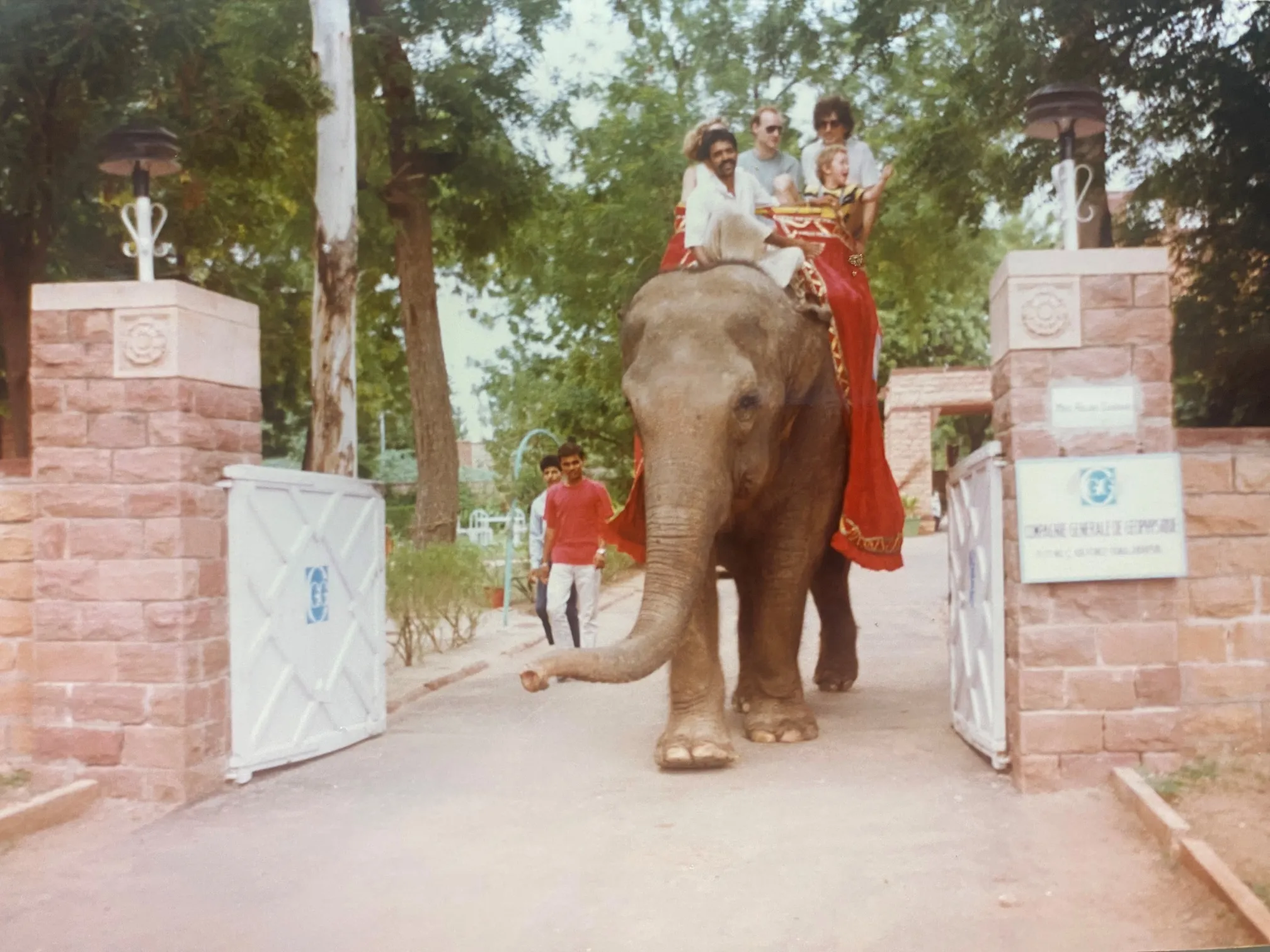
At some point, we ended up with between 40 and 50 sites in as many countries, some small, some large, but all with the same requirements: they needed to work, run the same software, and produce reproducible results with the quality our clients depend on. Visiting them all once a year became impossible, so the team learned to operate in an extremely distributed way, developing local competencies, spare part depots, and a robust communication network. We also became acutely aware of world events, often before CNN started reporting on them — there was always a site caught in whatever turmoil was developing, no matter where or when, calling for help.
Add to that the normal failures of any complex equipment operating in hard-to-control environments — tropical jungles, deserts, swamps, even seagoing vessels, and multiple time zones. Nights were short. Weekends were nonexistent, since we quickly discovered that not all countries share the same weekend days. The general feeling in the team was that this level of complexity and activity was not going to be sustainable. We were overdue for some simplification.
And sure enough, that is when Jean-Yves Blanc, our head of IT strategy, fresh from some university talk, stuck his head in my office and said: you know, we should really look at those Beowulf cluster things. I said sure, sounds good.
The Thing Called Linux
The thing with Beowulf clusters is that in 1999 when we started looking at them, you had to do everything yourself. Find the machines, often a PC designed to run Windows, compile the operating system (a thing called Linux) and connect them together as best as you could. You also had to source a shelf of some sort to install all of that. The look of it was very experimental, and that’s because it was. Fortunately, CGG (now Viridien) was (and still is) known for its can-do attitude, so we did not think too much about it and got on with the task at hand.
Then there was the software: Geovecteur — remember, geophysics on a machine with vector units. Here too, we had full control of the stack, and it was already ported onto half a dozen different CPUs and as many operating systems, so adding Linux on a PC was a piece of cake. I can say that confidently because I was not the one doing it. Jean-Yves was, and somehow this feels appropriate, given that he suggested the idea in the first place. Marketing would subsequently call that version Geocluster, after proper market analysis, of course.
Finally, we had to break the news to our management and users. The look of the solution did not exactly inspire confidence, but it ran — and the cost for equivalent processing capacity was close to an order of magnitude lower than the machines in production. That last point, more than any explanation of what a cluster was and how it would change the world, sealed the deal. We were given a budget to move from POC to industrial prototype, and quickly please.
It is worth noting that CGG already had a well-oiled path to putting new ideas into production. We recognized that in our business, being a quick adopter is a good thing, but throwing something untested at users is a risky business. To manage that risk, we maintained a short pipeline: a POC to validate an idea, and an industrial prototype to make sure we could procure, integrate, and maintain the product properly. We apply that process to most of our significant technology choices, and clusters were too much of a risk to bypass it.
To build that industrial prototype, we started looking at available systems and found an exceptional machine: an Alpha dual-processor desktop from DEC, by then owned by Compaq. An industrial-looking gray box with a level of performance that none of the Intel Pentium systems we evaluated, Dell and IBM included, could touch.
However, after visiting DEC's installations in France and seeing how the Compaq acquisition was playing out on the ground — support commitments being hedged and engineering teams thinning — we started having serious doubts about the future of the Alpha chip. We ended up selecting Dell dual Intel desktop boxes instead. Sure enough, in June 2001[SP2.1][SH2.2], Compaq announced that Alpha would be phased out by 2004 in favor of Intel's Itanium. Yes, that one.
Dell's machines were a good compromise between cost, efficiency, and availability — and another example of the best technology not necessarily winning the day. Industrial HPC can never be a beauty contest. It must be the right combination of performance, availability, useability and TCO. As with many things in business, it is a multidimensional optimization problem.
The industrial prototype worked: 64 dual Pentium Dell boxes running a hand-compiled version of Linux, with the still-wet Geocluster software on top. Was that going to make our life easier? Not exactly. Instead of industrial hardware with a supported operating system, we now had commodity desktops running open-source software they were not designed for, lined up on wire racks from Ikea. Life on the edge.
Eight Months, Tops
The question was where to test this in production, and the answer was Houston, because the imaging market in the Gulf was growing rapidly, outstripping the equipment available on that site. As my boss put it at the time: you go there, install the cluster, make sure they know how it works, and come back to Paris. Eight months, tops.
That was May of 2000. It is now 2026, and I am still in Houston. Why? That has to do with the first time a job ran on that cluster.
It was a Friday afternoon, a time when users like to load the machine to the brim for the weekend and promise clients that they will see the data first thing Monday. That evening, we started getting friendly calls telling us that the cluster contraption was crashing the jobs, and something needed to be done to fix that ‘tout de suite’. Looking closer, the jobs had not crashed — they had finished far faster than the users expected. A week later, everyone took this for granted and started asking for more machines.
What followed was a rapid and continuous expansion of cluster capacity at CGG's Houston site. First, we had to take over more of the ground floor — the only space that could take the load of full racks. I can recall preempting rooms and building new datacenter spaces at least 3 or 4 times in as many years.
Then we had to qualify a vendor: desktops would only go so far. Fortunately, Dell was in the process of building their first pizza-box server line, the PowerEdge, and they were our neighbors, a couple of hours away. We started buying a lot of them, and I became a regular in Round Rock. A video of me, as a representative client, was running in a loop in the lobby for some time, causing the reception staff to pause and look at me like they had seen me somewhere every time I visited.
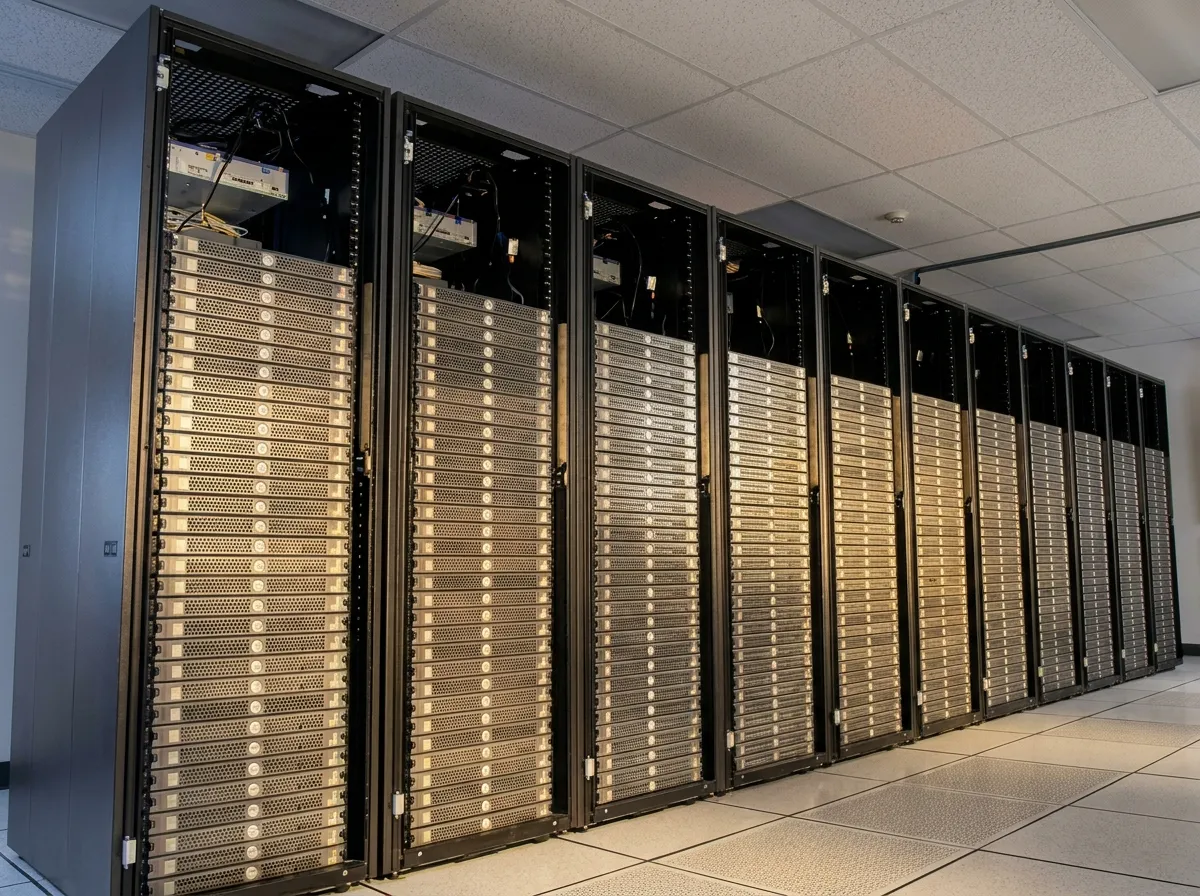
CGG made its industrial launch of PC clusters in early 2001, scaling to 128 Dell PowerEdge servers in Houston alone and expanding rapidly from there. By November 2002, our worldwide network of data processing centers had passed 10,000 CPUs, offering over 15 TeraFLOPS of compute. Less than a year later, we had doubled it to 30 TeraFLOPS — in the same order of magnitude as the Earth Simulator, the most powerful computer in the world at the time. At that point, and just before the Cloud became a thing, geophysics had some of the largest datacenters on the planet. You wanted to do serious HPC? You came to work with us.
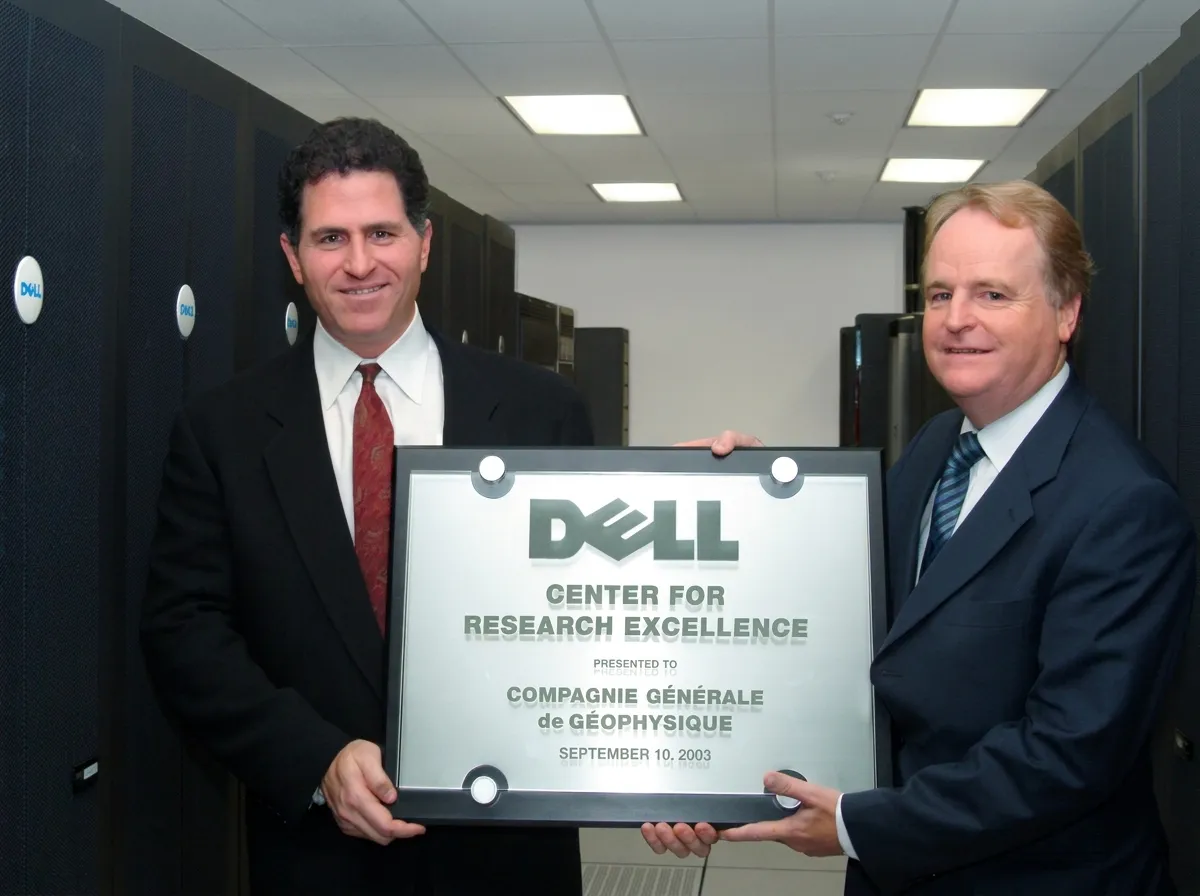
Michael Dell recognized this by designating CGG a Dell Center for Research Excellence — the first corporate recipient of that award. All previous recipients had been academic institutions. Robert Brunck, our chairman and CEO, accepted it on behalf of the company. It was recognition that a geophysical services company had become a serious compute pioneer, and that the industry had taken notice. Life was good again.
We were among the first to deploy that technology at scale, it worked, and we kept pushing it from that day forward. We adopted new Intel processors at a fast pace, and even briefly used Apple's PowerPC Xserve when they came out because they were more efficient. And they were typical Apple products too: sleek aluminum boxes that caused other companies’ salespeople to look very worried and spontaneously talk about discounts. Sadly, Apple soon stopped making those products: again, the best, and in this case most classy technology does not always win.
Meanwhile, the traditional PC vendors started realizing how large this market was, and what often follows started to happen: from a cheap commodity solution, more upscale models began to appear with multiple options, and prices steadily climbed. Kind of like the automobile industry, only faster. We lost the magic of those early years.
As for the users, they ate up all the capacity we could deploy, using more capable algorithms, creating better products, and significantly improving our position in the market. Ultimately, that is what technology is for: enabling business, and as my more business-minded colleague Gretell Otano (our Head of Growth & Strategy) would say, creating and preserving an unfair advantage. That is what an efficient HPC team is supposed to deliver for their clients.
The Takeaway
The IT industry has not progressed smoothly. It moves in long stretches of incremental improvement, punctuated by changes that rewrite the rules, and those inflection points are arriving faster and creating more disruption than they used to.
The cluster transition showed something worth remembering; early adoption works, provided you de-risk it properly. And it is not because new technology looks unlikely, messy, unpolished, or operationally demanding that it is the wrong choice. Sometimes that is precisely what the right choice looks like.
Viridien has always known how to read those moments and move on to them. The next episodes of my blog series will follow that thread — through the transitions that brought us to where we are today: a recognized leader in industrial HPC, with a demonstrated capacity to optimize every dimension of a large-scale compute workload using whatever tools the moment requires. Something that has not changed at Viridien regardless of how the hardware has evolved.
That capacity did not appear recently. As these posts attempt to show, it was built into one uncomfortable, often unconventional, technology decision at a time.
Got a question about our early field computing days?
Laurent Clerc,
CTO, HPC and Cloud Solutions